

Adding custom JavaScript, CSS and head content
On this page
Quite often you will need to add custom CSS, JavaScript, or a head content tag such as Google Tag Manager to your online store. StoreConnect provides several ways to insert content into your site on a per store basis, most of them configured on the Store record or on their own records in the Content Blocks list.
On this page
- Which method to use
- Head content block
- JavaScript and script blocks
- External Javascripts field
- CSS and custom styles
- Body content block
- Debugging custom JavaScript
Before you start
- You need edit access to the Store record for the store you are changing.
- To use script blocks, you need access to the Script Blocks tab. If you cannot see it in the App Launcher, ask your Salesforce administrator to grant tab and object access.
- Custom code is applied per store. If you run more than one store, repeat the steps for each one.
Which method to use
| Method | Use it for | Liquid | Where it renders |
|---|---|---|---|
| Head content block | Head tags, font links, meta tags, and JavaScript that has to contain Liquid | Yes | End of <head> |
| Script blocks | JavaScript libraries and snippets you want to keep as separate, individually ordered records | No | <head>, before the head content block |
| External Javascripts field | One block of global JavaScript held directly on the Store record | No | <head>, before script blocks |
| Body content block | Live chat widgets and other scripts that must load after the page content | Yes | Just before the closing </body> tag |
All four methods apply to your online store. Only script blocks also reach the point of sale app, so JavaScript you need in the POS has to live in a script block with POS selected under Channels.
For CSS, see How to add custom CSS.
Head content block
Use the head content block for global custom Liquid code, font links, and JavaScript that contains Liquid code. For JavaScript libraries and snippets there are better options, covered in the next section.
- Go to the Content Blocks list and select New (
s_c__Content_Block__c). - Set the Template to No added styling.
- Provide a name such as “Head Content Block”, or a name of your choice.
- Use the Content field to paste the code, script, or tag you need in the head section of your site.
- Select Save.
- Open your store’s Store record and point it at the block:
- Under the Global Content section, select the HTML Head Content Block
field (
s_c__Head_Content_Block_Id__c). - Search for your head content block.
- Select Save.
- Under the Global Content section, select the HTML Head Content Block
field (
Your content now renders in the head of every page of your online store. The POS app does not render head content blocks.
:::warning
HTML Head Content Block is in the Global Content section of the Store record, not the Content Management System (CMS) section. Do not confuse it with Page Header Content Block, which sets the visible header of your store.
:::
For example, to add Google Tag Manager, paste its container snippet into Content:
```html
```
JavaScript and script blocks
Script Blocks hold JavaScript that is included on your web store, and keep your scripts
organized and maintainable as a set of records rather than one long block of code. Each
one is an s_c__Script_Block__c record, so you can also create them through the API or
Data Loader. See the Script Block object reference for
every field.
-
Go to the Script Blocks list and select New.
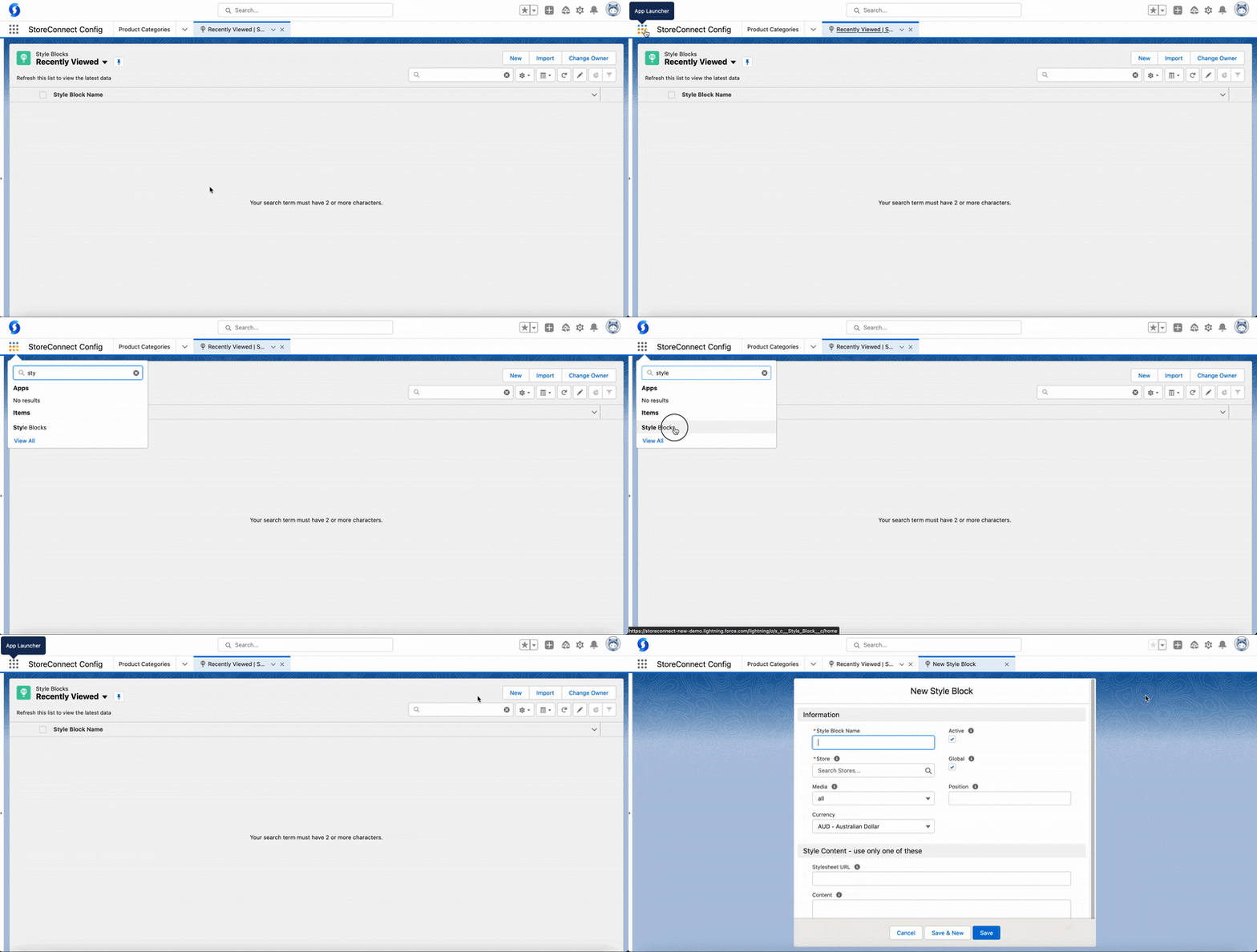
- Give it a useful name.
- Set the configuration:
- Store — the store this script block belongs to.
- Active — only active script blocks are included on the website.
- Channels — the surfaces the script runs on. Select Web for your online store, POS for the point of sale app, or both. This field is required, and a script block without Web never loads on your online store even when it is active and global. A block saved before the field became required can still have Channels empty, and an empty Channels loads on every channel.
- Global — include the script automatically on every page. Leave it unchecked and the script block is not included on your store at all.
- Position — the order script blocks load in. Lower numbers load first, and this only applies when Global is checked.
- Provide the script itself, using one of:
- Script URL — the URL of an external JavaScript file, for example
https://example.com/script.js. If you set this, any value in Content is ignored. - Content — the JavaScript itself, written without
<script>tags. StoreConnect adds them for you.
- Script URL — the URL of an external JavaScript file, for example
- Select Save.
An active, global script block set to the Web channel is rendered in the <head> of
every page on your store, wrapped in <script> tags, or as
<script src="..."> when you set Script URL. Select POS instead, and the same
block is rendered in the <head> of the POS app on every page load.
You can also add code such as a Facebook pixel or a domain validation meta tag here, as
long as it is not already wrapped in <script> tags.
:::warning
Liquid code does not work inside Script Blocks. If your script needs Liquid, use the head content block above instead.
:::
:::note
If you link a script block to a Cookie record for privacy compliance, it only loads for visitors who have consented to that cookie. Script blocks with no linked cookie always load. See Cookie management and privacy compliance.
:::
External Javascripts field
The External Javascripts field on the Store record
(s_c__External_Javascripts__c) holds a single block of JavaScript that renders in the
<head> of every page, wrapped in <script> tags. Use it for a quick global script when
you do not need the ordering and on/off control that separate script blocks give you.
- Open your store’s Store record.
- Under the Global Content section, select the External Javascripts field.
- Paste your JavaScript, written without
<script>tags. - Select Save.
Your script now runs in the head of every page on that store, before any script blocks. Liquid code does not work in this field, and the POS app does not render it.
CSS and custom styles
Body content block
The Body Content field links to a CMS content block holding anything you want
inserted at the end of the <body> of your store.
Common uses are live chat scripts, or other custom JavaScript that needs to load after the page has loaded.
- Go to the Content Blocks list and select New (
s_c__Content_Block__c). - Set the Template to No added styling. The body content block is rendered through its template, so any other template wraps your code in that template’s markup.
- Provide a name such as “Body Content”, or a name of your choice.
- Use the Content field to paste the code, script, or tag you need in the body section of your site.
- Select Save.
- Open your store’s Store record and point it at the block:
- Under the Global Content section, select the Body Content field
(
s_c__Body_Content_Block_Id__c). - Search for your body content block.
- Select Save.
- Under the Global Content section, select the Body Content field
(
Your content now renders just before the closing </body> tag on every page of your
online store. The POS app does not render body content blocks.
Debugging custom JavaScript
The most common problem with custom JavaScript is a script that never runs, despite correct syntax and no errors in the console. This usually means the script ran before the elements it needs existed.
Wrap your code in a DOMContentLoaded or load event listener so it runs once the page
is ready.
```js
// Run the logic inline document.addEventListener(‘DOMContentLoaded’, () => { console.log(‘Hello!’); });
// Or define the function first, then reference it const init = () => { // logic here };
document.addEventListener(‘DOMContentLoaded’, init); ```
:::note
In the second example, const init must be declared before the line that references it.
A const cannot be used above its own declaration, so listing the event listener first
throws a ReferenceError and the script silently does nothing.
:::
Your script now runs once the page is ready, and the console.log appears in the browser
console on load.
Was this article helpful?
Thanks for your feedback! It helps us improve our docs.